
There are few household amenities we take for granted as completely as hot water. Every morning, millions of homeowners turn a faucet lever, expecting an immediate, comforting stream of heated water for showers, dishes, and laundry. Behind this quiet luxury sits your water heater—a heavy steel tank working continuously under high pressure, extreme temperature cycles, and constant exposure to corrosive minerals. Because it operates silently tucked away in a basement, utility closet, or garage, it is easily forgotten until the day it suddenly ceases to function.
Water heater failures rarely happen without warning, but the early signs are often subtle enough to be ignored by the untrained eye. A slight change in water clarity, a faint popping noise during a heating cycle, or a minor damp patch on the concrete beneath the unit are frequently dismissed as normal operational quirks. In reality, these are the early distress signals of a appliance nearing the end of its structural lifespan.
When a water heater tank suffers a catastrophic breach, the results are immediate and devastating. An average residential tank holds between forty and eighty gallons of pressurized water that can dump across your living space in a matter of minutes, followed by an uninterrupted flow of cold main supply water until someone manually shuts off the valve. Taking time to learn the early indicators of system failure allows you to schedule a planned replacement on your own terms, saving thousands of dollars in property repair and avoiding the chaos of a late-night plumbing crisis.
Temperature Fluctuations and Inconsistent Hot Water Supply
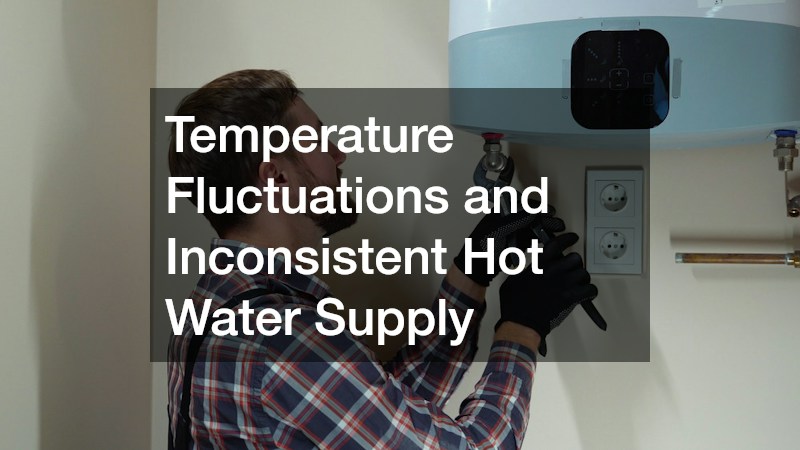
One of the earliest functional warnings that a water heater is deteriorating manifests as a loss of heating consistency. You may notice that your morning shower runs out of hot water faster than it used to, or that the water temperature fluctuates unpredictably between warm and scalding. While homeowners often attribute this to heavy household water usage, erratic thermal performance usually points to internal mechanical fatigue or mineral accumulation inside the tank.
In electric water heaters, inconsistent temperatures often indicate that one of the two heating elements has failed or that the surrounding thermostat is malfunctioning. In gas models, temperature drops usually signal a heavy layer of sediment insulating the bottom of the tank from the burner assembly. As calcium carbonate and sediment settle out of hard municipal water, they form a thick, rock-like barrier over the heating surface.
Accumulated sediment reduces the total volume of water the tank can hold and heat efficiently. The burner or heating element must run significantly longer to heat water through a dense layer of mineral scale, and heat trapped beneath sediment causes local temperature spikes, tricking the lower thermostat into shutting down prematurely.
To diagnose temperature issues, start by checking the thermostat dial on your unit. It should ideally be set to 120 degrees Fahrenheit for optimal balance between sanitation, safety, and energy efficiency. If increasing the temperature slightly does not restore consistent warmth, or if the water turns lukewarm within minutes, the heating elements or internal tank lining are likely degraded beyond simple adjustment.
Discolored Water and Metallic Odors
Turning on a hot water tap only to see rusty, brownish, or cloudy water flow into your sink is a clear sign that something is wrong within your plumbing infrastructure. When discolored water appears exclusively when running the hot water tap—while cold water remains perfectly clear—the issue originates directly inside your water heater tank rather than the main municipal supply lines.
Steel water heaters are lined internally with a thin layer of porcelain enamel, but steel remains susceptible to rust over time. To prevent internal corrosion, every tank is equipped with a sacrificial anode rod—a long magnesium or aluminum wire hung inside the water. The anode rod draws corrosive galvanic reactions away from the steel walls, rusting away so the tank doesn’t have to. Once the anode rod completely dissolves, corrosive minerals immediately begin attacking the steel tank itself.
Catching sacrificial anode degradation early allows for simple water heater repairs rather than a total system replacement, extending the working life of the appliance by several years. However, once rust flakes begin appearing in your bath or sink, the internal tank walls are actively dissolving.
If rusty water persists after flushing the tank and replacing the anode, schedule an inspection with a local plumber to check internal dip tubes and wall integrity. Once the steel shell thins to the point of structural failure, internal corrosion cannot be reversed, making complete tank replacement inevitable.
Unfamiliar Popping, Rumbling, and Knocking Sounds
As a water heater ages, it often becomes increasingly noisy. While minor expansion creaks are normal as metal heats and cools, distinct popping, rumbling, or deep knocking sounds coming from the utility closet are clear indicators that your tank is under severe thermal stress. These sounds are not caused by mechanical components breaking apart, but rather by the physics of trapped boiling water beneath sediment layers.
Over years of service, dissolved minerals in hard water solidify and drop to the bottom of the tank, creating a dense, hardened crust over the heating element or gas burner floor. As the water beneath this sediment blanket heats up, it becomes trapped and reaches boiling temperatures much faster than the surrounding body of water.
Trapped pockets of steam force their way upward through the compacted sediment layer, creating an audible popping sound. Large chunks of mineral scale churn violently across the bottom of the tank during high-output heating cycles, while continuous localized overheating beneath sediment beds causes the steel tank bottom to expand unevenly, cracking the protective glass lining.
The combination of localized overheating and violent steam expansion eventually fractures the internal enamel coating. Once water contacts raw steel beneath the protective lining, rust forms rapidly, leading to hairline cracks along bottom seams. Flushing your tank annually using a heavy-duty drain hose helps clear soft sediment before it hardens into a noisy, tank-destroying crust.
Moisture Pooling, Valve Seepage, and Corrosion Crust
Visual inspection around the base and fittings of your water heater is one of the most reliable ways to spot imminent failure. While minor atmospheric condensation can occur during cold weather when the tank refills with cold groundwater, standing liquid or dried white crust around fittings indicates active leakage.
Water heaters naturally expand and contract as they heat and cool. Over thousands of thermal cycles, tiny stress fractures can develop along internal welds, threaded plumbing connections, or around the temperature and pressure (T&P) relief valve. Because water under pressure seeks the path of least resistance, microscopic cracks that are imperceptible when the tank is cold will spray or weep water when the unit reaches full operating pressure.
Finding standing water around the base of an old tank warrants an immediate call to an emergency plumber before the seam gives way completely and floods surrounding finished spaces. If a slow, unnoticed leak has already saturated subfloors, baseboards, or drywall, partnering with a certified water restoration company ensures flooded mechanical rooms are properly dried to prevent structural mold growth and hidden timber rot.
Be sure to inspect the safety valve on the top or side of the unit for active dripping or heavy white mineral crust around the discharge pipe. Examine threaded nipple fittings for blue-green corrosion or rust around cold inlet and hot outlet pipes at the top of the tank, and ensure the drain pan beneath the tank is dry with a drain line leading unimpeded to an exterior outlet or sump pit.
Pressure Spikes and Whole-Home Plumbing Strain
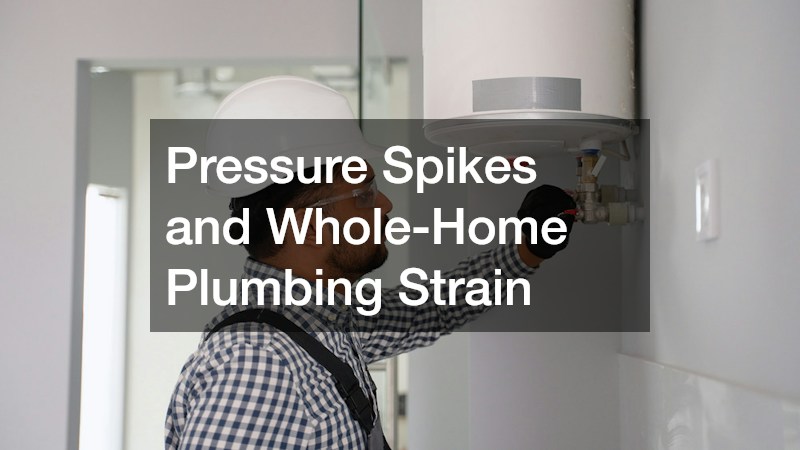
Water expands in volume when heated—a physical phenomenon known as thermal expansion. In older, open plumbing systems, expanding water simply pushed back out into the municipal water main. However, modern plumbing codes require backflow preventers and check valves at the water meter, creating a “closed system.” When water heats inside a closed system, the resulting pressure spike has nowhere to go unless a properly sized expansion tank is installed.
Without a functioning expansion tank, every heating cycle sends destructive pressure spikes throughout your home’s plumbing infrastructure. These sudden spikes stress water heater seams, weaken flexible supply lines, and ruin sensitive internal valves inside washing machines and dishwashers.
High system pressure and aging pipes can simultaneously exacerbate drain line failures, requiring specialized sewer repair to restore proper flow when multiple fixtures discharge simultaneously under high volume. When aging galvanized lines fail alongside your water heater, consulting licensed repipe plumbers guarantees your whole-home water supply is modernized safely with durable, high-pressure materials like PEX or copper.
Test your static home pressure by threading a simple pressure gauge onto an outdoor hose bib; home water pressure should ideally rest between 40 and 60 PSI. Tap the side of your expansion tank to verify its condition—it should sound hollow on the top half (air) and solid on the bottom (water). If it sounds solid throughout, the internal bladder has ruptured. Finally, keep an eye on T&P discharge, as frequent weeping from the temperature and pressure relief valve often indicates excessive thermal expansion spikes rather than a bad valve.
Water Damage Mitigation and Emergency Containment
When a water heater finally suffers a major structural rupture, knowing how to act quickly can save your property from catastrophic structural damage. Every member of the household should know the physical location of the water heater’s cold water supply shut-off valve and electrical breaker or gas isolation switch.
The moment you spot active, uncontained water pooling around your tank, execute emergency shutdown procedures. Turn the cold water handle clockwise until it stops to cut off incoming pressure. Next, turn off the dedicated double-pole circuit breaker in your main electrical panel (for electric units) or twist the gas control knob to the “OFF” position (for gas units) to prevent dry-firing or fire hazards.
If a catastrophic tank burst occurs, contacting a professional water damage company immediately stops structural timber decay and drywall ruin through rapid industrial extraction and structural drying.
During an emergency, follow a strict shutdown sequence: cut the water supply by turning the cold water inlet valve clockwise, cut the energy source by shutting off the gas valve or flipping the electrical circuit breaker, attach a garden hose to the bottom drain valve to direct remaining water to a drain, and open hot water faucets throughout the home to release vacuum suction for faster draining.
Installing preventative containment accessories when upgrading your tank provides priceless peace of mind. A heavy-duty plastic or aluminum drain pan piped directly to an exterior wall or floor drain captures slow leaks, while an automated inline shut-off valve equipped with floor sensors will mechanically cut incoming water the instant moisture is detected.
Rural Water Considerations: Wells, Pumps, and Hard Water Hazards
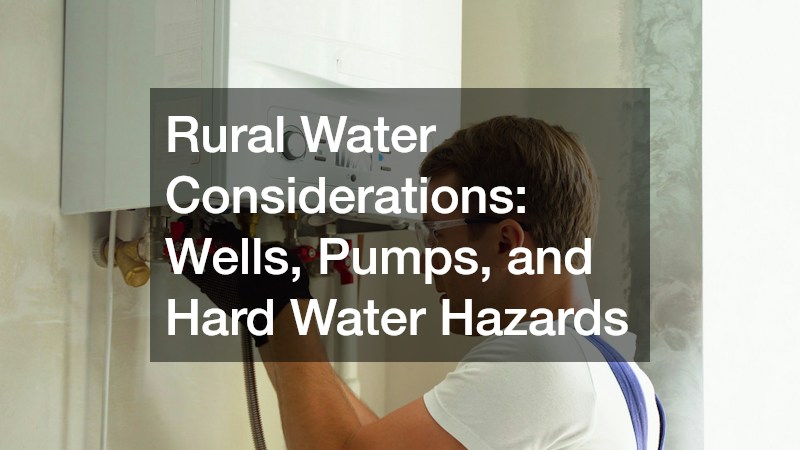
Homes drawing supply water from private wells face unique challenges when it comes to maintaining water heater health. Well water typically carries higher concentrations of dissolved minerals, dissolved gases, fine sand, and iron bacteria compared to treated municipal supplies. These impurities significantly accelerate corrosion rates and speed up sediment accumulation inside hot water storage tanks.
Furthermore, water pressure in a well-fed home is regulated by a mechanical pressure tank and switch rather than steady city mains. Fluctuations in well pressure can cause thermal shocks inside the water heater, loosening scale and stressing internal welds.
Inconsistent water pressure from a failing pressure tank requires prompt well pump repair to protect downstream water heater elements from dry-firing when air pockets pass through the lines. Properties dealing with high mineral acidity or heavy sand infiltration may need to consult specialists in well drilling to evaluate water table quality, deepen well casings, or install commercial-grade whole-home filtration systems upstream.
Working with an experienced water well company ensures your filtration, softening, and pressure delivery equipment are correctly balanced for high-temperature appliances. Adding a dedicated sediment pre-filter ahead of your water heater traps raw grit before it ever enters the tank, preserving internal glass linings and keeping heating elements clear of premature crusting.
Your home’s water heater is a hard-working appliance that gives clear warning signs long before it surrenders to corrosion and pressure fatigue. By learning to pay attention to subtle cues—such as minor temperature drops, unusual popping sounds, rusty water, or faint moisture crusts around fittings—you can catch failing components before they turn into costly structural floods.
Incorporate a quick visual and auditory check of your water heater into your regular home maintenance routine. Flush sediment annually, inspect the anode rod every few years, and monitor your system’s age closely. Taking proactive steps today ensures your home stays safe, dry, and consistently supplied with the reliable hot water your family relies on every day.